Apollo 11 : One Small Step For a Man, One Giant Leap For Humanity
Published by
Seonha Kim
on
NASA’s 11th Apollo Mission in 1969 & author’s insight
NASA’s 11th Apollo Mission conducted the first ever successful journey of humans to the Moon. Beyond this title, the mission had compelling objectives to explore the Moon that became the foundation of America’s space exploration.
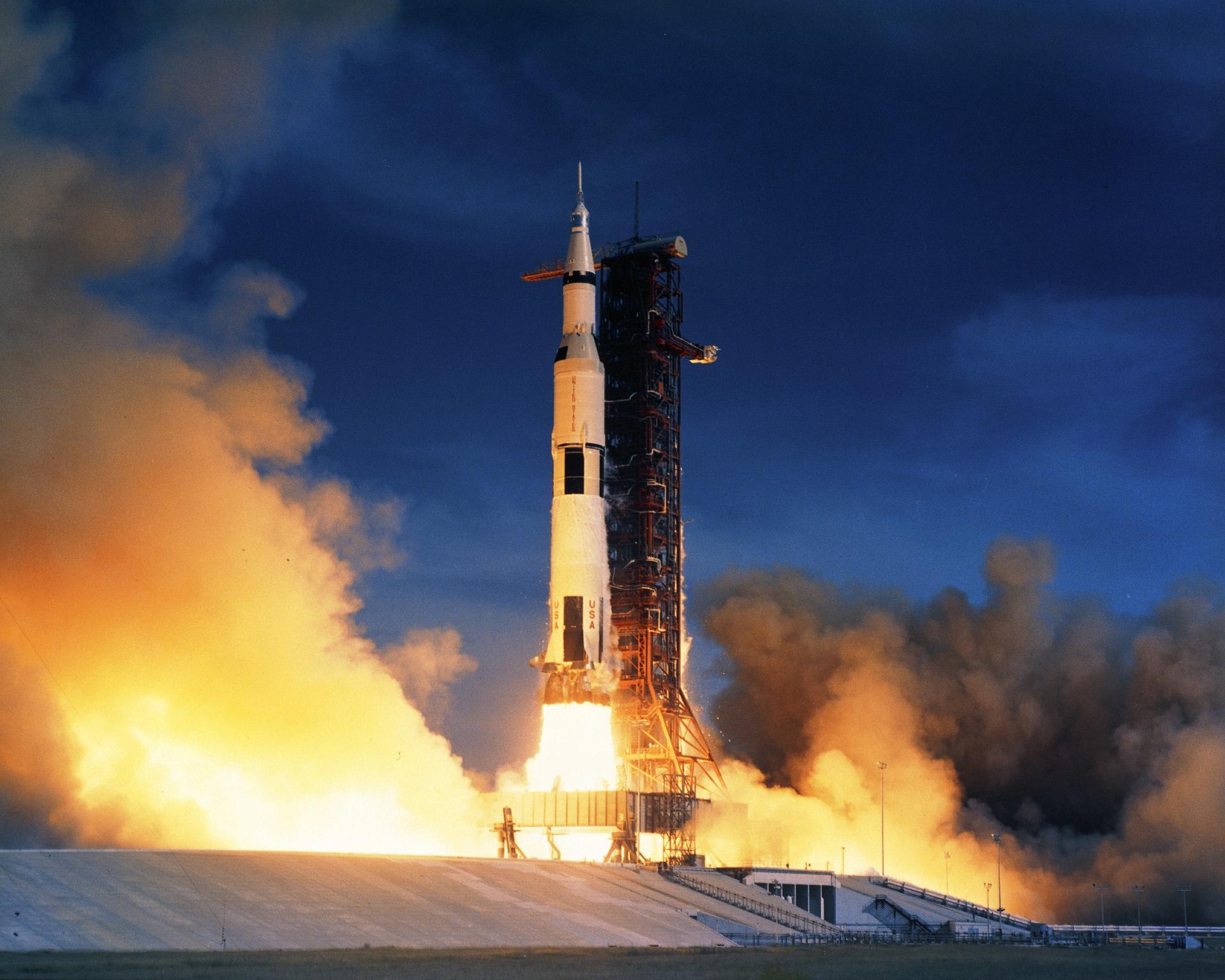
The three astronauts, Neil Armstrong (Commander), Edwin “Buzz” Aldrin, (Lunar Module Pilot), and Michael Collins (Command Module Pilot) launched from Cape Kennedy, Florida on July 16th, 1969.
The Apollo 11; liftoff Credits: NASA
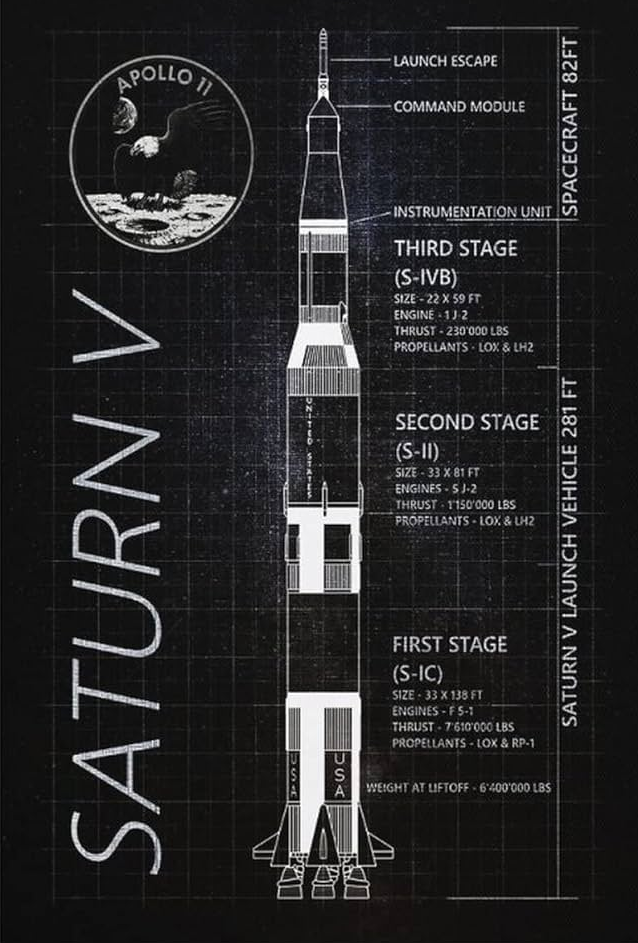
The Saturn V rocket lifted the crew off the launchpad. It was the largest rocket ever built, and over 400,000 engineers put this vehicle together in the span of a decade. This multi-stage rocket weighed around 6.5 million pounds and stood at 363 feet tall.
The first stage, S-IC, overcame the Earth’s gravity by creating about 7.5 million pounds of thrust with its five F-1 engines and 559,000 gallons of fuel. Its weight occupied over 75% of the entire rocket, and it jettisoned into the Atlantic Ocean after it emptied its fuel about three minutes into launch.
The second stage, S-II, propelled the vehicle to a height of 115 miles and brought its velocity to four miles per second with its five engines. Nine minutes into the mission, it too was jettisoned into the Atlantic Ocean.
The third stage, S-IVB, brought the Apollo spacecraft into the Earth’s orbit using its single engine. After one and a half orbits around, it fired again to put the spacecraft into the point where it would intercept the Moon. Two hours and 45 minutes after launch, it jettisoned to eventually fall into the Sun’s orbit.
The Instrument Unit (IU) was responsible for providing information and commands to the three stages. It contained all the electronic systems, in charge of everything from launch to the final engine burn of the Saturn V.
Finally, the Launch Escape System (LES) was a precautionary mechanism in case there was a problem with Saturn V during launch or the first few minutes of flight. When executed, it would lift the entire Command Module with the crew on board away from the exploding rocket. Three minutes after launch, it was jettisoned along the S-IC into the Atlantic Ocean.
When the three astronauts got to the Moon, only the Apollo spacecraft, which was 82 feet, remained out of the 363 feet rocket that launched.
Anatomy of Saturn V Credits: Amazon
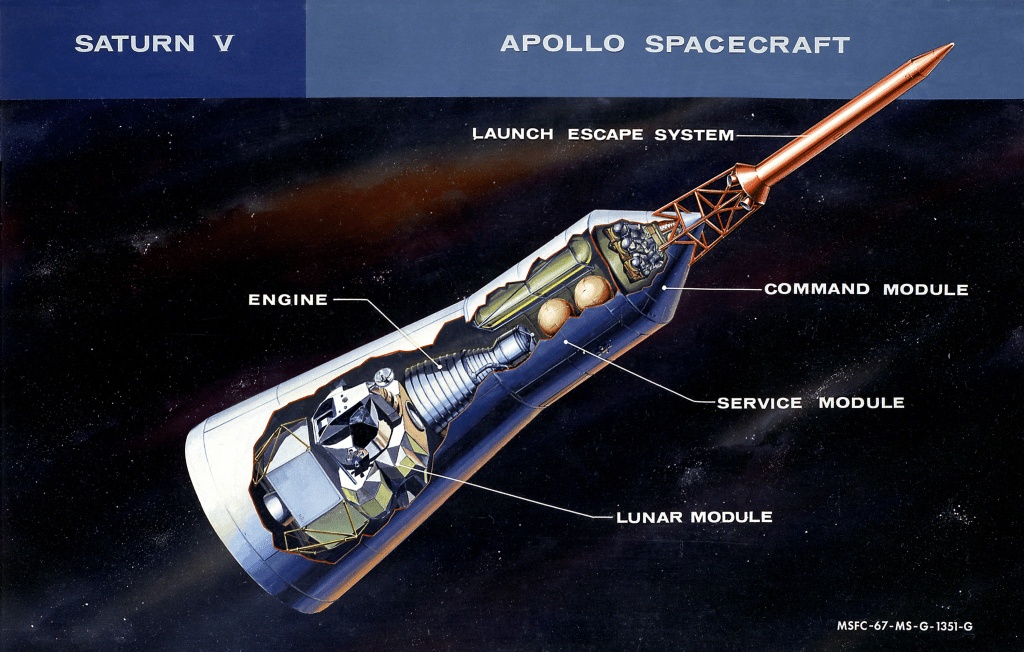
The Apollo spacecraft was designed to accomplish something that was never done before; to take humans to a celestial object nearly 240,000 miles away. It was highly sophisticated and state-of-the-art, built at the peak of human technology, engineering, and innovation. Sitting at the top of Saturn V, it consisted of three modules dedicated to get the astronauts onto the Moon and back safely.
TheCommand Module (CM) was where the crew stayed during the mission and controlled their flight. Manufactured by North American Aviation, it weighed 13,000 pounds with the crew on board and 11,700 pounds after splashdown. It was also nicknamed “Columbia”.
The Service Module (SM)carried the spacecraft’s propulsion system and supplied the crew’s needs such as oxygen, power, and fuel. Also manufactured by North American Aviation, it weighed 55,000 pounds when fully fueled and 11,500 pounds when empty. Together with the Command Module, the two modules were called the Command Service Module (CSM).
The Lunar Module (LM) landed the two crew members onto the lunar surface, supported their missions on the Moon, and returned them back to the CSM in lunar orbit. It was a two-stage spacecraft consisting of an Ascent Stage and a Descent Stage. Manufactured by Grumman Corporation, it weighed 36,000 pounds when fully fueled and crew on board and 10,800 pounds when empty.
Anatomy of the Apollo Spacecraft Credits: Wikipedia
After all Saturn V stages had been emptied and jettisoned, the Apollo spacecraft was on trajectory to fall into the Moon’s orbit. At 75 hours, 30 minutes, and 46 seconds into the flight, Mission Control sent a Go for Lunar Orbit Insertion, one of the most challenging parts of the mission. The perfect amount of engine burn was necessary to fall into the Moon’s orbit, as too long of a burn would crash the spacecraft onto the Moon, and too short of a burn would circle them around the Moon and back to Earth.
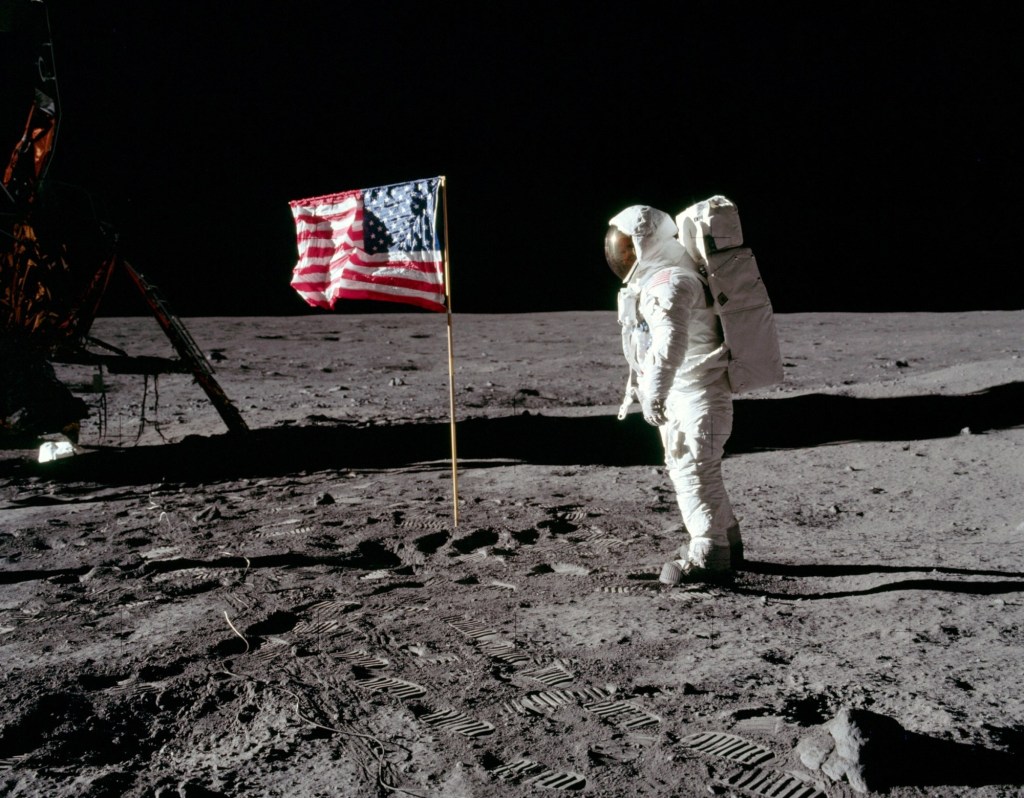
The engine burn was flawless. After settling into orbit, the two astronauts, Armstrong and Aldrin, floated into the LM to prepare for lunar surface operations. At 102 hours, 45 minutes, and 43 seconds, the LM finally landed at the Sea of Tranquility of the Moon. The crew inside the LM put on their life support backpacks, visors, and Moon boots and opened the hatch of the spacecraft.
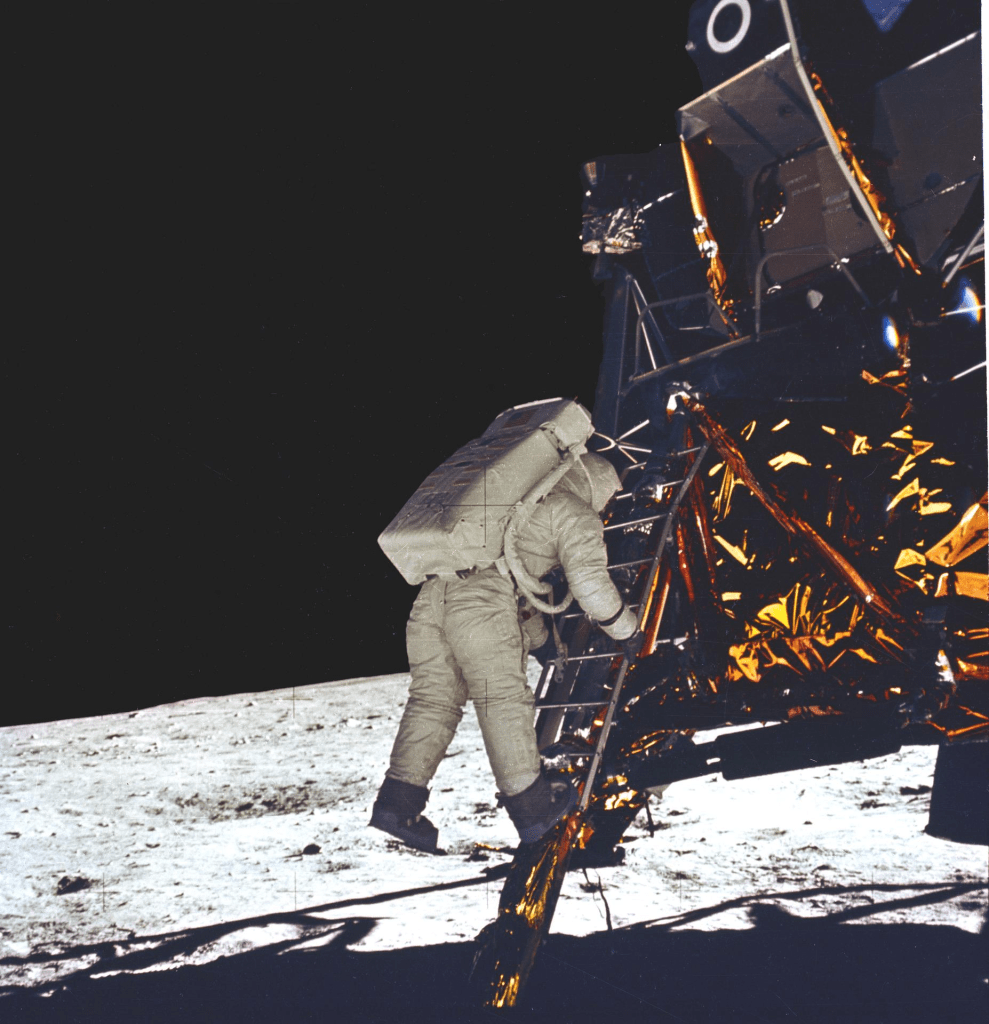
At 109 hours, 24 minutes, and 12 seconds, Commander Neil Armstrong unfolded the ladders of the LM and proceeded down the ladder. Then he stepped onto the Moon’s surface as he became a hero for countless young minds around the world.
Astronaut Neil Armstrong steps off the LM Credits: NASA
“That’s one small step for [a] man, one giant leap for mankind” -Neil Armstrong proclaims as he becomes the first human to go to the Moon
Over 650 millionpeople watched this extraordinary moment on television. Astronaut Buzz Aldrin soon joined Armstrong, and they explored the lunar surface for about two and a half hours.
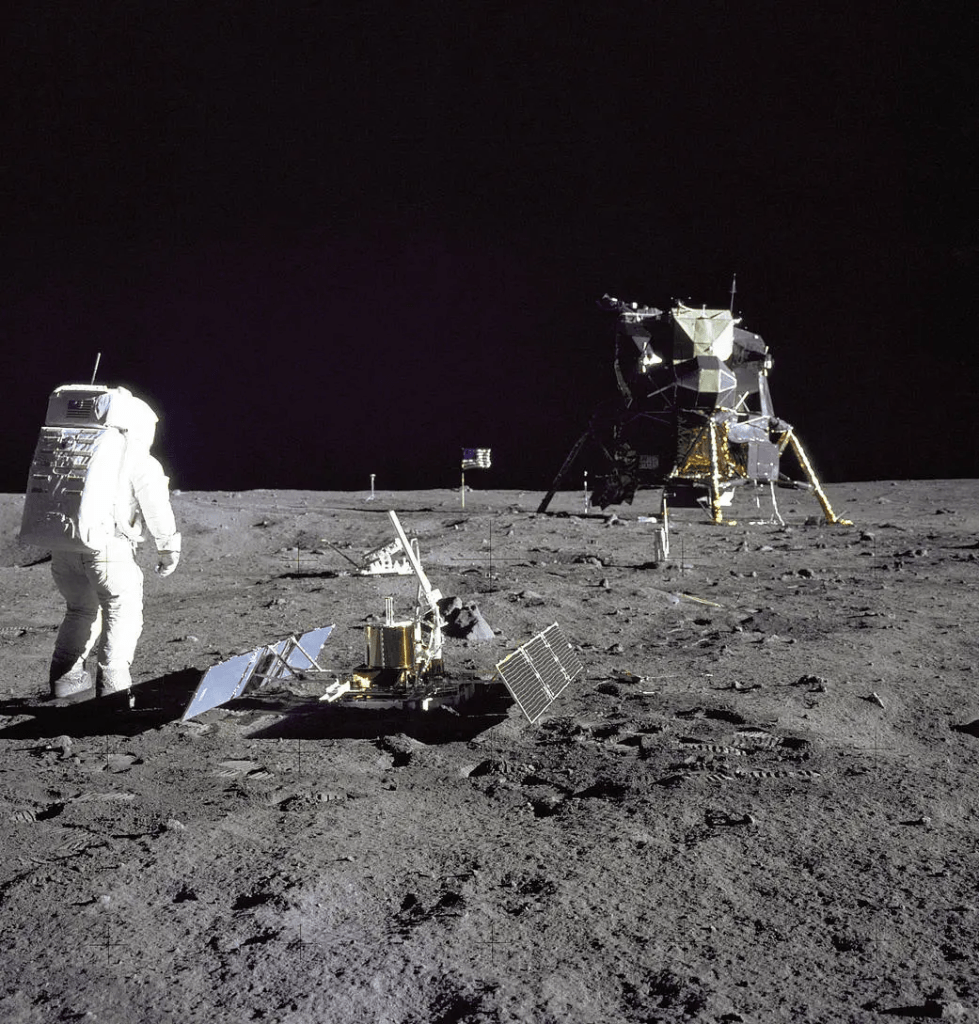
They took photographs, gathered information on solar winds and the Moon’s seismic and geographic data. They also installed devices like the Laser Ranging Retroreflector, a device used for precise measurements of the varying distance between Earth and Moon. Astronaut Michael Collins remained in the CSM while orbiting the Moon until Armstrong and Aldrin completed their missions.
Astronaut Buzz Aldrin deploys the Early Apollo Scientific Experiments Package on the lunar surface Credits: NASA
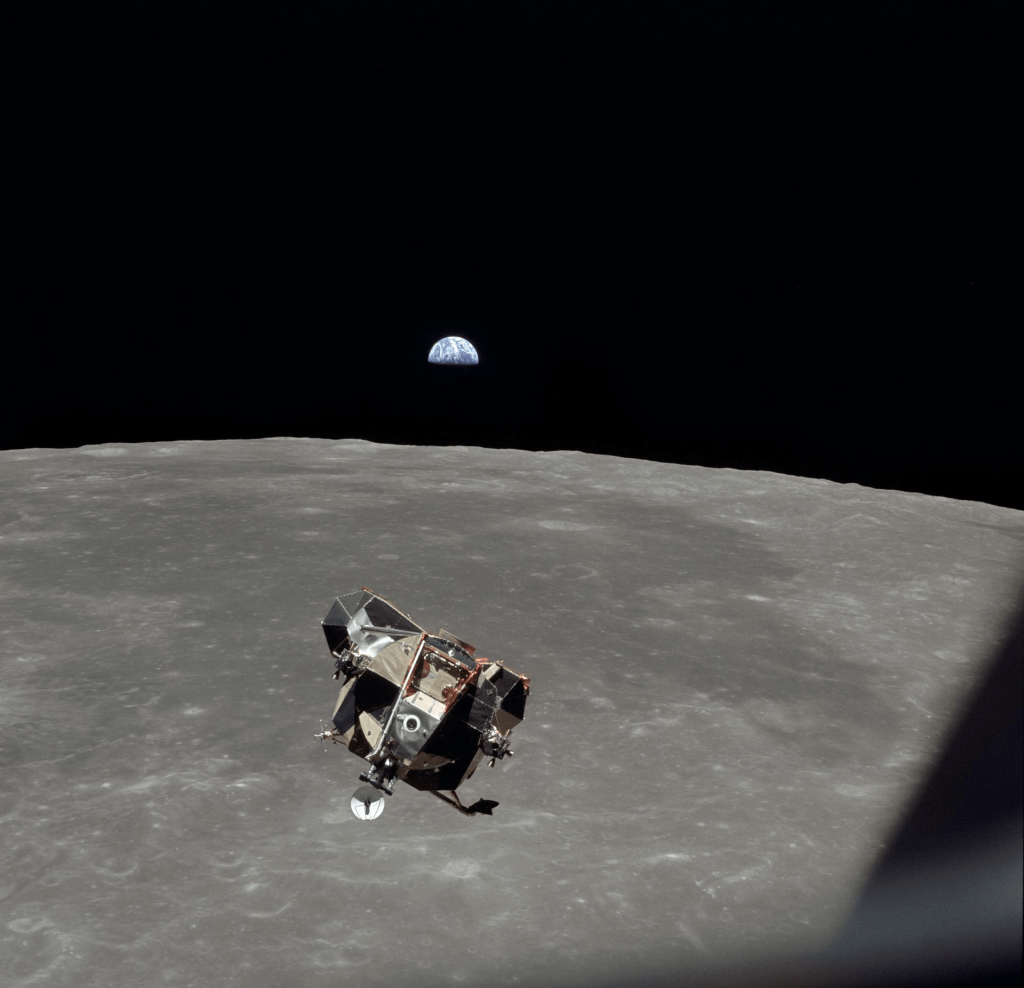
Armstrong and Aldrin spent a total of 21 hours and 36 minutes on the Moon’s surface. Leaving the Descent Stage of the LM behind, the Ascent Stage took off to rendezvous with the CSM in lunar orbit at 124 hours, 22 minutes, and 2 seconds. To reunite with Collins, Aldrin fired three subsequent engine burns; one to get into the Moon’s 11-mile elliptical orbit, then into a circular 54-mile orbit, then finally, CSM’s orbit. By the time the two ships docked, the CSM had completed its 27th orbit around the Moon.
The LM captured from the CSM during their rendezvous Credits: NASA
After docking, the LM was jettisoned, which eventually crashed back into the Moon. The crew began their journey back home in the CSM at 135 hours, 23 minutes and 42 seconds, firing the Service Propulsion System engine of the SM to fall into course back to Earth. 59 hours later, the crew jettisoned the Service Module to shed some weight for reentry. The SM had assisted the crew with all necessary supply for the duration of the mission.
Collins maneuvered the CM so that its heat shields faced Earth. At 195 hours, 3 minutes, and 34 seconds, the crew began reentry into the Earth’s atmosphere. It caused extreme sparks along the heat shields, which disconnected transmission from Mission Control for over four minutes.
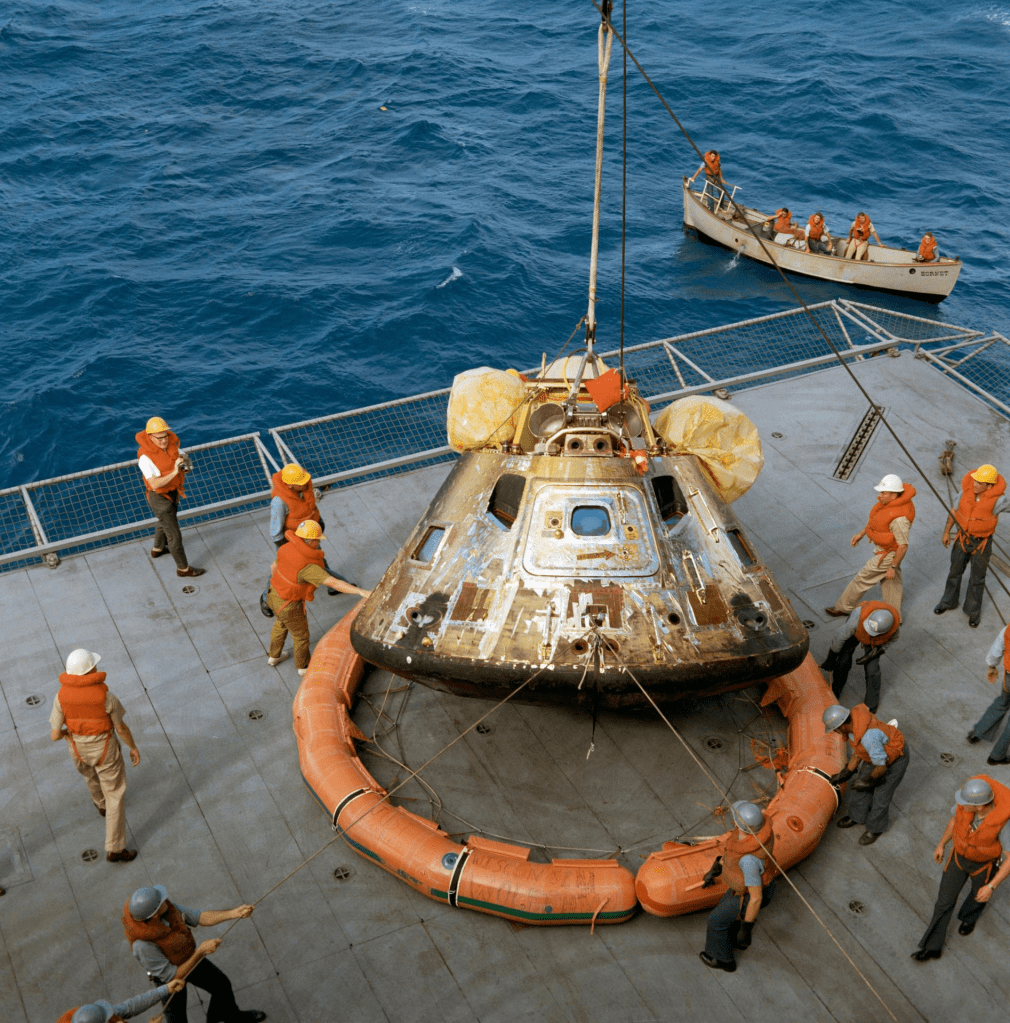
The reentry was successful. After seven minutes, the parachutes opened above where the USS Hornet was waiting. At 195 hours, 18 minutes, and 35 seconds, the Apollo 11 splashed down in the South Pacific Ocean.
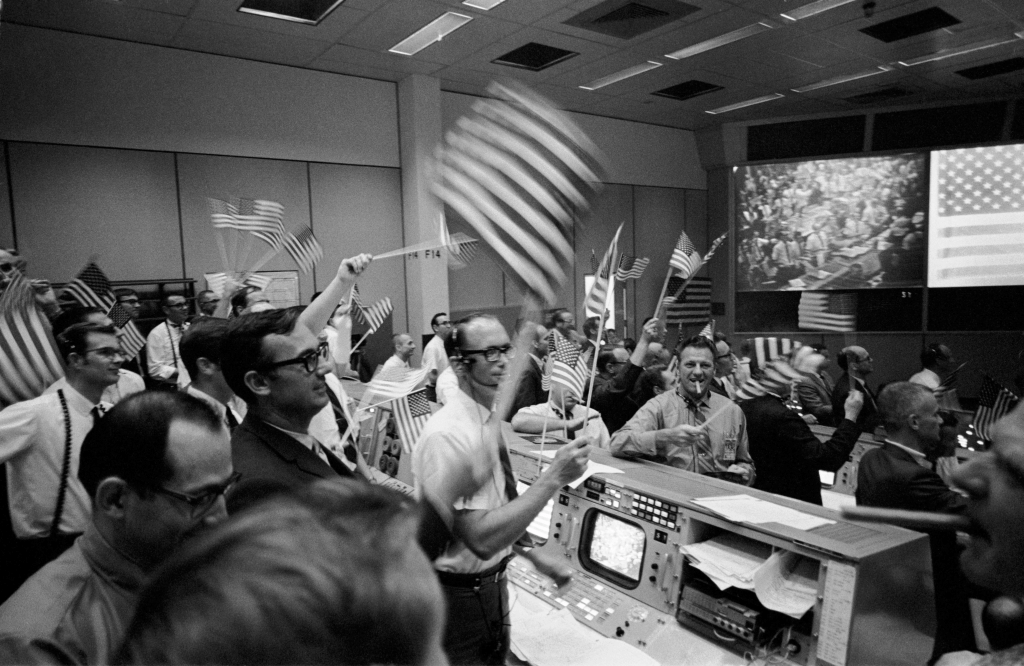
MIssion Control celebrates the conclusion of the Apollo 11 missions Credits: NASAThe USS Hornet retrieves the CM Credits: NASA
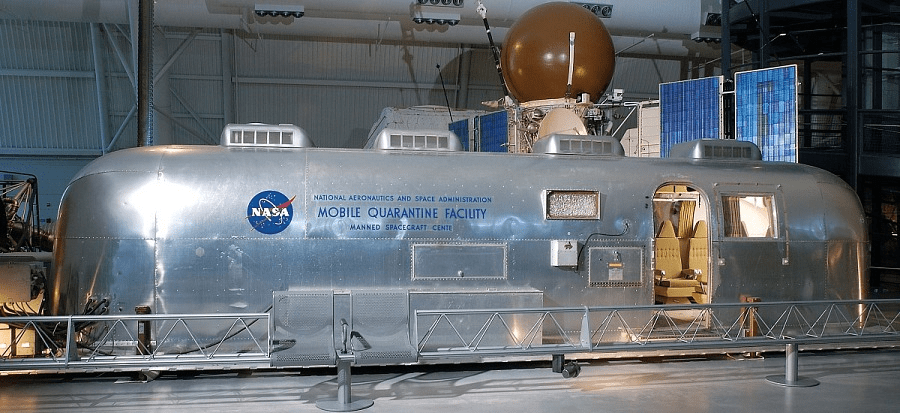
The astronauts, wearing their BIGs (Biological Isolation Garments; some believed that the astronauts might carry germs from the Moon), walked into the Mobile Quarantine Facility (MQF). They spent the next three days in this trailer, ensuring no germs would escape.
The Mobile Quarantine Facility Credits: National Air and Space Museum
They spend another two weeks in the Lunar Receiving Laboratory in NASA’s Johnson Space Center for isolation of themselves and rock samples from the Moon. Post-quarantine, the astronauts traveled around 24 different countries in victory of Apollo 11. Millions around the world celebrated as one human race, shouting, “We went to the Moon!”
The Apollo missions continued until Apollo 17’s final flight in 1972. Over half a century later, no one has been back to the Moon.
Author’s Insight
I was inspired by the book How We Got to the Moon by John Rocco to write this article. As a STEM enthusiast and space lover, I was speechless when I learned what humans were capable of doing in the 1960s. Everything was analog, and it was the first ever attempt to send humans to another celestial body beyond Earth. It was incredible to me the passion and the hard work it took to accomplish this mission. Author John Rocco introduced me to a quote from mathematician Katherine Johnson: “The whole idea of going into space was new and daring. There were no textbooks, so we had to write them.” It was truly inspirational to see that though this mission was executed from scratch, we humans managed to do it in the most sophisticated way and bring success to arguably the biggest challenge in history.
Reading the book, I fell in love with the complexity of engineering a space exploration mission. I loved how every part of the missions were thought twice and how every mechanism were constructed through creativity and scientific cognition. I simply couldn’t grasp in my head the amount of work that was put into these missions and the disappointment that thousands of people must have shared after a series of trial and errors. My respect for every individual of the mission and their perpetual determination will never be doubted.
Despite the great success, I was devastated to find that we had no further steps towards the Moon after the Apollo missions. However, with even more sophisticated and advanced technology we have today, I look forward to the success of the Artemis, an ongoing Moon mission, with the hopes of going back to where we started from.
References
How We Got to the Moon. 1st ed., John Rocco, 2020.
 DarkLittleStar